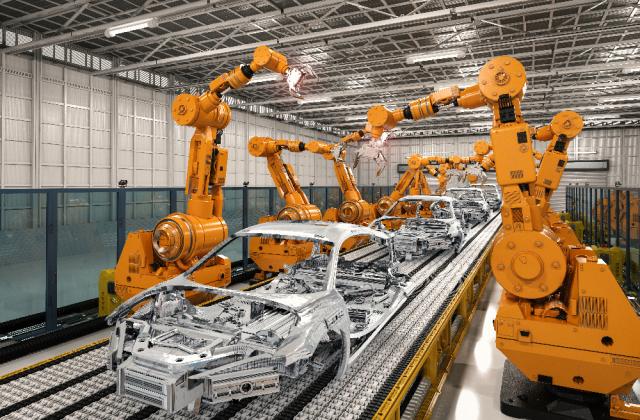
Mechatronics is a concept of Japanese origin (1970’s) and can be defined as the application of electronics and computer technology to control the motions of mechanical systems (figure 1.1.1). Figure 1.1.1 Definition of Mechatronics It is a multidisciplinary approach to product and manufacturing system design (Figure 1.1.2). It involves application of electrical, mechanical, control and computer engineering to develop products, processes and systems with greater flexibility, ease in redesign and ability of reprogramming. It concurrently includes all these disciplines. Figure 1.1.2 Mechatronics: a multi-disciplinary approach Mechatronics can also be termed as replacement of mechanics with electronics or enhance mechanics with electronics. For example, in modern automobiles, mechanical fuel injection systems are now replaced with electronic fuel injection systems.…
It is often said that one of the biggest advantages which ceramics have over other materials is their corrosion resistance, that is, their chemical inertness in corrosive environments. Is this always true? Corrosion is generally understood as property degradation due to environmental attack. As it will be shown in this section, there are a number of environments in which ceramics can degrade at a rapid rate. There exists a tremendous need for reliable and corrosion resistant structural ceramic or partly ceramic materials which can be used in aggressive environments such as: - high energy battery systems (such as sodium-sulphur): beta-alumina is being investigated - gas turbines: silicon nitride and/or carbide are being investigated - heat exchangers: SiC, composites are being investigated Ceramics are indeed much more environmentally…
Stages is fatigue failure: I. crack initiation at high stress points (stress raisers) II. propagation (incremental in each cycle) III. final failure by fracture Stage I - propagation • slow • along crystallographic planes of high shear stress • flat and featureless fatigue surface Stage II - propagation Crack…
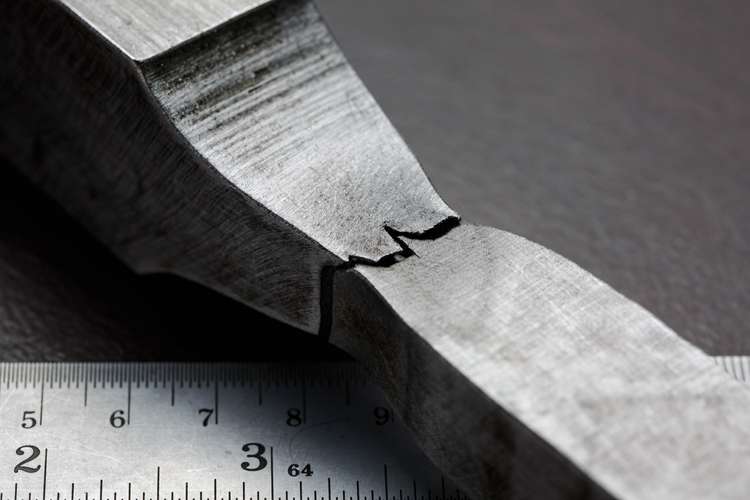
Fatigue is the catastrophic failure due to dynamic (fluctuating) stresses. It can happen in bridges, airplanes, machine components, etc. The characteristics are: • long period of cyclic strain • the most usual (90%) of metallic failures (happens also in ceramics and polymers) • is brittle-like even in ductile metals, with little plastic deformation • it occurs in stages involving the initiation andpropagation of cracks.…
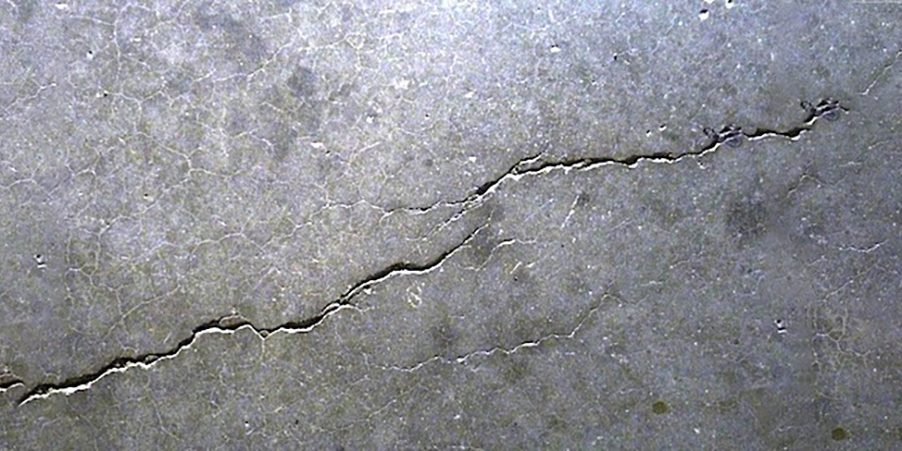
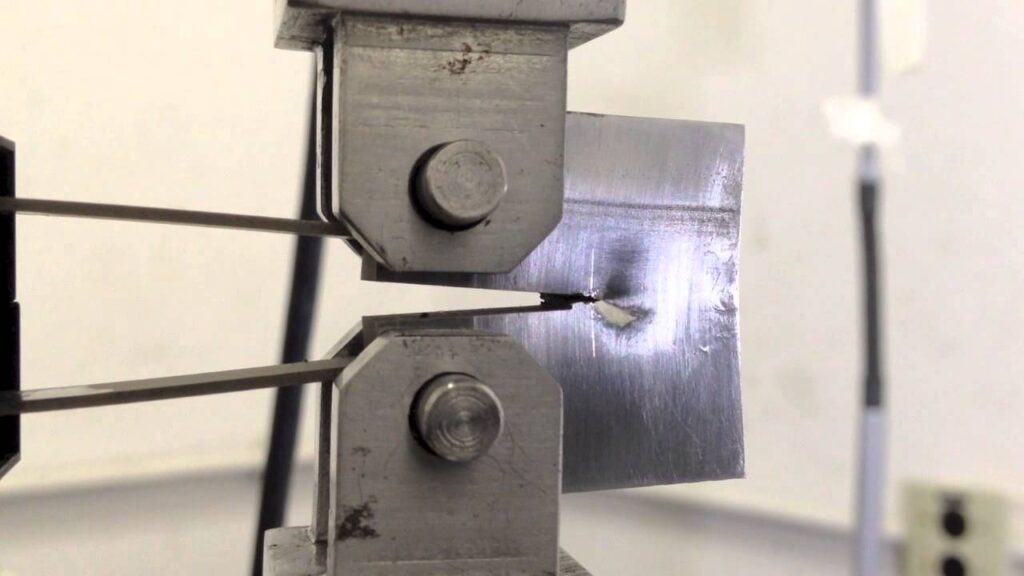
Fundamentals of Fracture Fracture is a form of failure where the material separates in pieces due to stress, at temperatures below the melting point. The fracture is termed ductile or brittle depending on whether the elongation is large or small. Steps in fracture (response to stress): • Crack formation • Crack propagation Ductile Fracture Stages of ductile fracture - Initial…
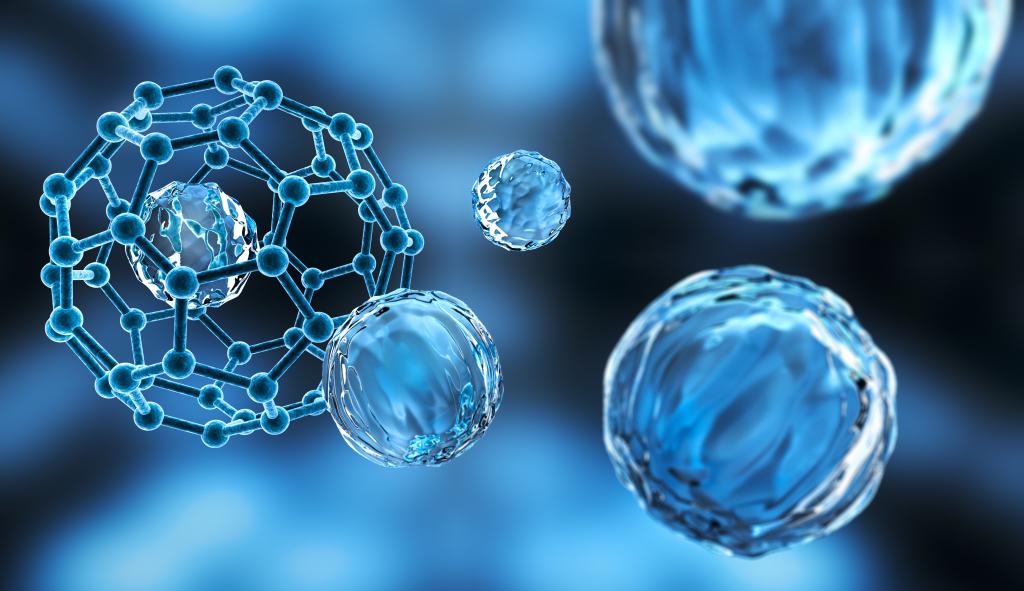
Nanostructured materials are those materials whose structural elements—clusters, crystallites or molecules have dimensions in the range of 1-100 nm. These small groups of atoms, in general, go by different names such as nanoparticles, nanocrystals, quantum dots and quantum boxes. Substantial work is being carried out in the domain of nanostructured materials and nanotubes during the past decade since they were found to have potential for high technology engineering applications. One finds a remarkable variations in fundamental electrical, optical and magnetic properties that occur as one progresses from an ‘infinitely extended’ solid to a particle of material consisting of a countable number of atoms. The various types of nanostructured materials which has been considered for applications in opto-electronic devices and quantum- optic devices are nano-sized powders of silicon, silicon-nitride (SiN), silicon-carbide (SiC) and their thin films. Some of these are also used as advanced ceramics with controlled micro…
Smart materials are designed materials that have one or more properties that can be significantly changed in a controlled fashion by external stimuli, such as stress, temperature, moisture, pH, electric or magnetic fields. Group of new and state-of-the-art materials now being developed, and expected to have significant influence on present-day technologies, especially in the fields of medicine, manufacturing and defense. Smart/Intelligent material system consists some type of sensor (detects an input) and an actuator (performs responsive and adaptive function). Actuators may be called upon to change shape, position, natural frequency, mechanical characteristics in response to changes in temperature, electric/magnetic fields, moisture, pH, etc. Four types of materials used as actuators: Shape memory alloys, Piezo-electric ceramics, Magnetostrictive materials, Electro-/Magneto-rheological fluids. Materials / Devices used as sensors: Optical fibers, Piezo-electric materials, Micro-electro-mechanical systems (MEMS), etc. Typical applications: By incorporating sensors, actuators and chip processors into system, researchers are able to stimulate biological human-like behavior; Fibers for bridges, buildings, and wood utility…
Particle-reinforced composites These are the cheapest and most widely used. They fall in two categories depending onthe size of the particles: • large-particle composites, which act by restraining the movement of the matrix, if well bonded. • dispersion-strengthened composites, containing 10-100 nm particles, similar to what was discussed under precipitation hardening. The matrix bears the major portion of the applied load and the small particles hinder dislocation motion, limiting plastic deformation. Large-Particle Composites…