- Values are individual in nature. - Values are comprised of personal concepts of responsibility, entitlement and respect. - Values are shaped by personal experience, may change over the span of a --lifetime and may be influenced by lessons learned. - Values may vary according to an individual’s cultural, ethnic and/or faith-based background. “Never change your core values.” In spite of all the change around you, decide upon what you will never change: your core values. Take your time to decide what they are but once you do, do not compromise on them for any reason. Integrity is one such value.
An elderly carpenter was ready to retire. He told his employer-contractor of his plans to leave the house- building business and live a more leisurely life with his wife enjoying his extended family. He would miss his paycheck, but he needed to retire. They could get by. The contractor was sorry to see his good worker go and asked if he could build just one more house as a personal favor. The carpenter said yes, but in time it was easy to see that his heart was not in his work. He resorted to shoddy workmanship and used inferior materials. It was an unfortunate way to end his career. When the carpenter finished his work and the builder came to inspect the house, the contractor handed over the house key to the carpenter. “This is your house,” he said, “it is my parting gift to you.” What a shock! What a Shame! If only he had known he was building his own house, he would have done it all so differently. Now he had to live in the home he built none too well. Do we find ourselves in similar situations as the carpenter? Moving through our work hours fast paced, driven to “get the job done”, without much thought to moral values. How do we regain our focus as individuals and organizations? This is the challenge for the employee and the employer. Ethics are fundamental standards of conduct by which we work as a professional.
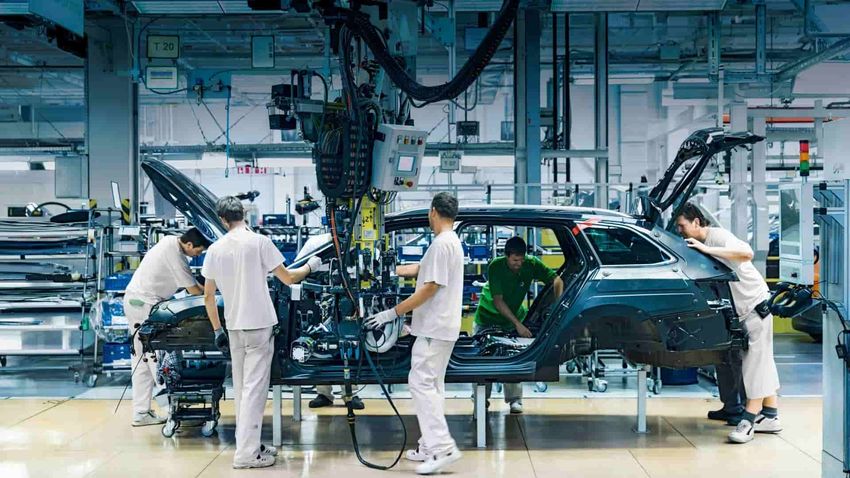
Supply of a good quality product or a system to the market is the basic aim of the manufacturing industry. The product should satisfy the needs of the customers and it must be reliable. To achieve this important product-parameter during a short lead time is really a challenge to the manufacturing industry. This can be achieved by building up the ‘quality’ right from the product design stage; and maintaining the standards during the ‘production stages’ till the product-delivery to the market. A number of sensors and systems have been developed that can monitor quality continuously …
we have seen that a number of activities and operations viz. designing, analyzing, testing, manufacturing, packaging, quality control, etc. are involved in the life cycle of a product or a system (see Figure 1.1.4). Application of principles of automation to each of these activities enhances the productivity only at the individual level. These are termed as ‘islands of automation’. Integrating all these islands of automation into a single system enhances the overall productivity. Such a system…
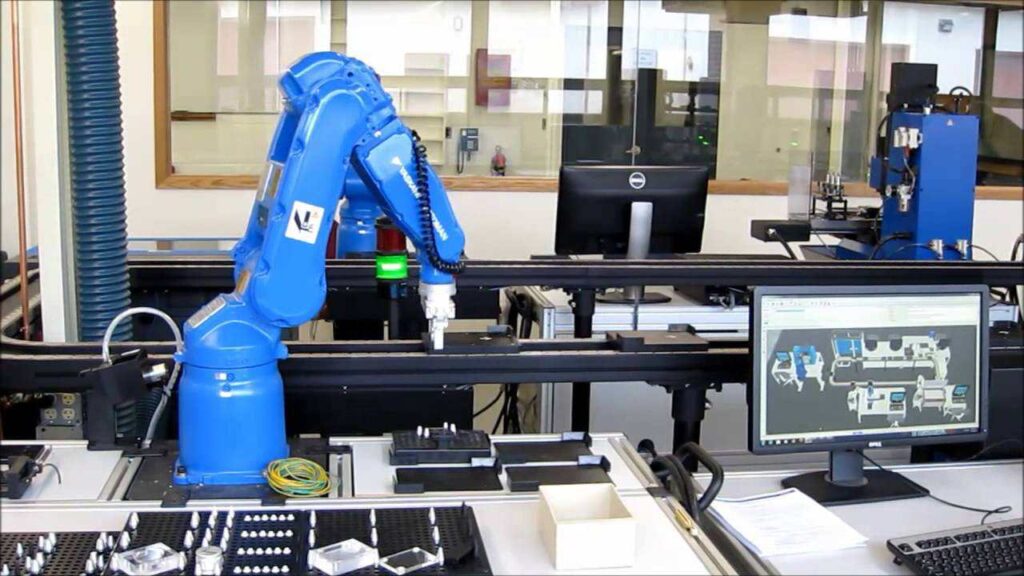
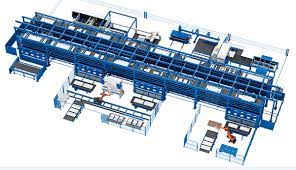
Nowadays customers are demanding a wide variety of products. To satisfy this demand, the manufacturers’ “production” concept has moved away from “mass” to small “batch” type of production. Batch production offers more flexibility in product manufacturing. To cater this need,Flexible Manufacturing Systems (FMS) have been evolved. As per Rao, P. N. [3], FMS combines microelectronics and mechanical engineering to bring the economies of the scale to batch work. A central online computer controls the machine tools, other work stations, and the transfer of components and tooling. The computer also providesmonitoring and information control. This combination of flexibility and overall control makes possible the production of a wide range of products in small…
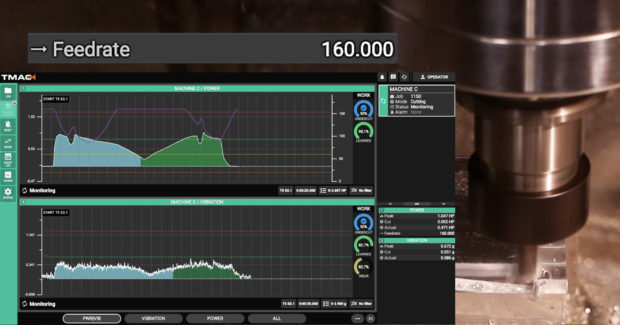
Uninterrupted machining is one of the challenges in front manufacturers to meet the production goals and customer satisfaction in terms of product quality. Tool wear is a critical factor which affects the productivity of a machining operation. Complete automation of a machining processrealizes when there is a successful prediction of tool (wear) state during the course of machining operation. Mechatronics based cutting tool-wear condition monitoring system is an integral part of automated tool rooms and unmanned factories. These systems predict the tool wearand give alarms to the system operator to prevent any damage to the machine tool and workpiece. Therefore it is essential to know how the mechatronics is helping in monitoring the tool wear. Tool wear can be observed in a variety of ways. These can be classified in two groups (Table1.2.1).…
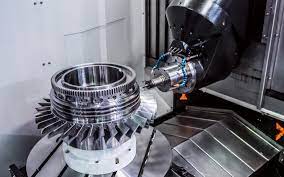
CNC machine is the best and basic example of application of Mechatronics in manufacturing automation. Efficient operation of conventional machine tools such as Lathes, milling machines, drilling machine is dependent on operator skill and training. Also a lot of time is consumed inwork part setting, tool setting and controlling the process parameters viz. feed, speed, depth of cut. Thus conventional machining is slow and expensive to meet the challenges of frequently changing product/part shape and size. Figure 1.2.1 Comparison between a conventional machine tool and a CNC machine tool Computer numerical…
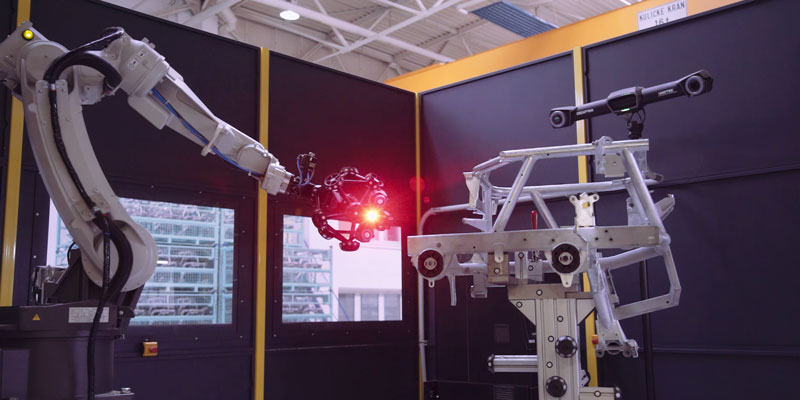
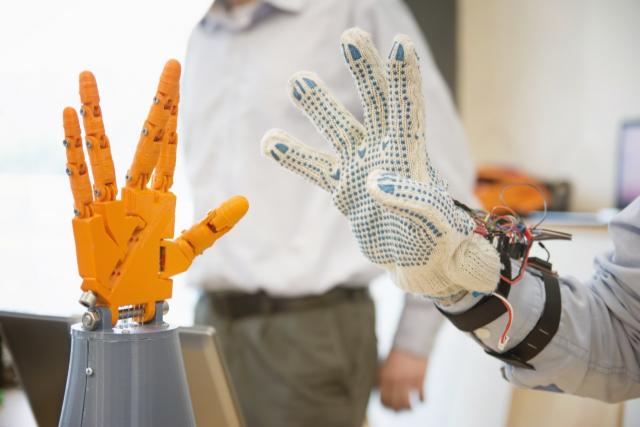
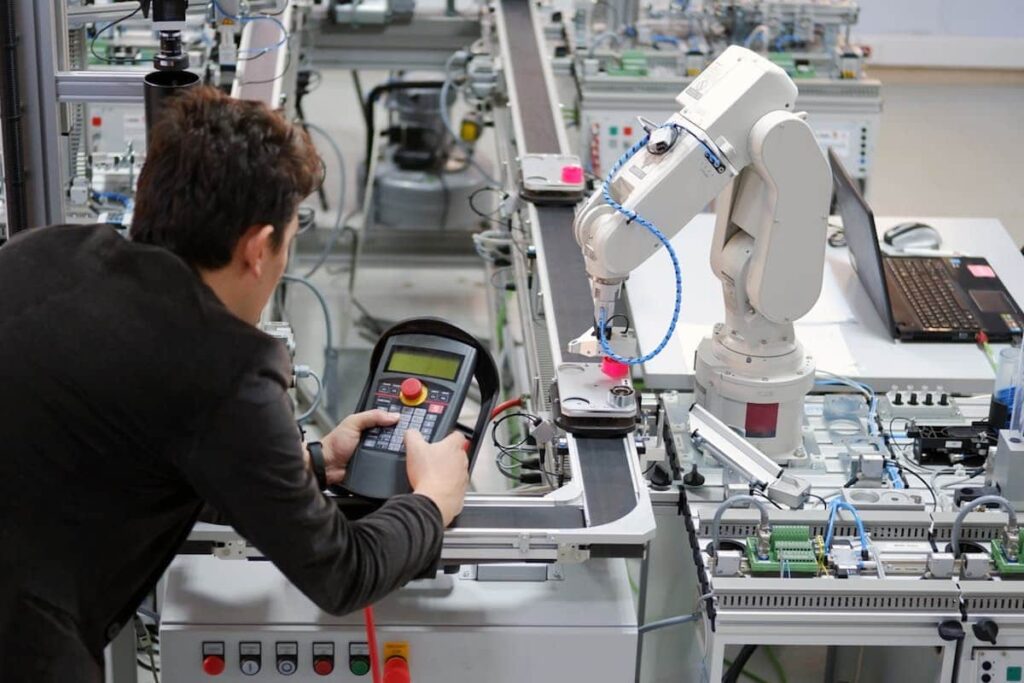
Mechatronics has a variety of applications as products and systems in the area of ‘Manufacturing automation’. Some of these applications are as follows: 1. Computer numerical control (CNC) machines 2. Tool monitoring systems 3. Advanced manufacturing systems a. Flexible manufacturing system (FMS) b. Computer integrated manufacturing (CIM) 4. Industrial robots 5. Automatic inspection systems: machine vision systems 6. Automatic packaging systems Now, let us…
Figure 1.1.3 Operations involved in design and manufacturing of a product Today’s customers are demanding more variety and higher levels of flexibility in the products. Due to these demands and competition in the market, manufacturers are thriving to launch new/modified products to survive. It is reducing the product life as well as lead-time tomanufacture a product. It is therefore essential to automate the…